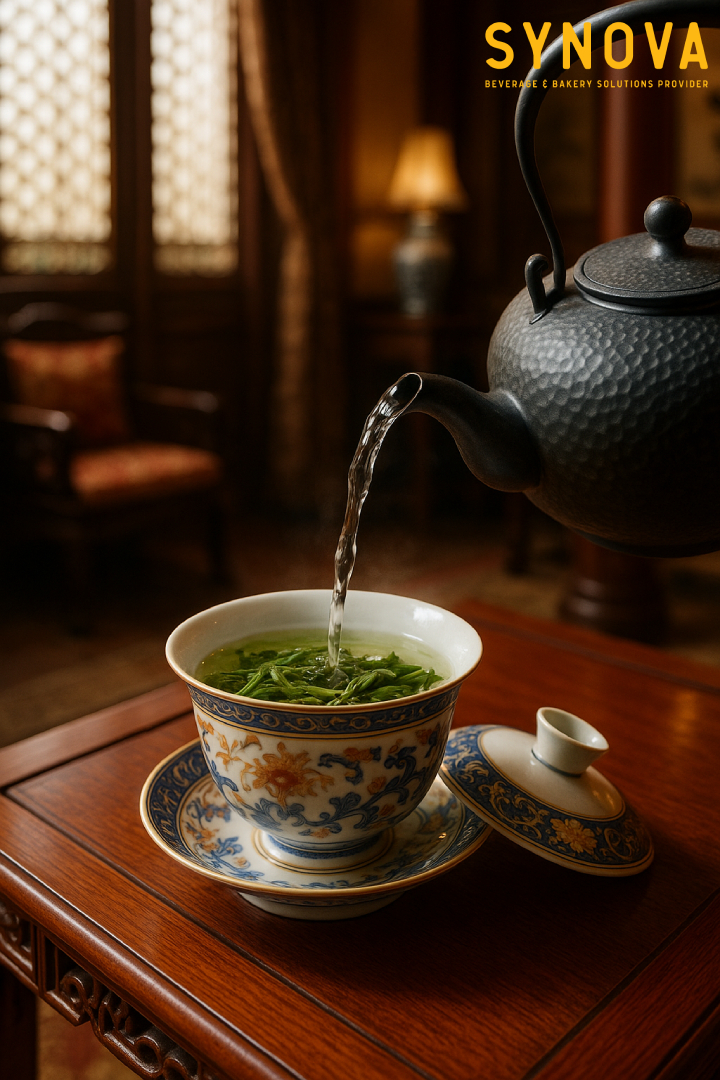


Water Temperature & Tea Brewing: A Practical Guide to Unlocking the Best Flavor in Every Tea
Water Temperature & Tea Brewing: A Practical Guide to Unlocking the Best Flavor in Every Tea

Water Temperature & Tea Brewing: A Practical Guide to Unlocking the Best Flavor in Every Tea
A practical guide to choosing the right brewing temperature for each type of tea—from green tea to pu-erh—to ensure consistent taste and elevate professional tea menus with confidence.

When we talk about brewing tea with the “right” taste, most people focus on tea variety, leaf quality, or steeping time. Yet one crucial factor is often overlooked: water temperature.
Natural sweetness, freshness, smoothness, or bitterness can all change dramatically depending on how hot the water is.
Why does water temperature matter?
Because hot water is responsible for extracting compounds from tea leaves.
If the water is too hot, excessive bitter and astringent compounds are released.
If the water is not hot enough, the tea’s key flavor characteristics will not be fully expressed.
Below is a water temperature guide for each type of tea, designed to help cafés maintain consistent taste and instantly elevate tea menu quality.
1. Green Tea
Recommended temperature: 70–80°C
Green tea contains antioxidants and amino acids that contribute to its smooth, gentle taste. These compounds are highly sensitive to heat. Using water that is too hot can easily cause excessive bitterness. In addition, vitamin C in green tea begins to degrade when exposed to temperatures above 80°C.
Result: Clean, refreshing taste with light astringency and no harsh bitterness
(Steeping time should not exceed 3 minutes)
Best for: Clear green tea, fruit-infused green tea, and refreshing tea-based drinks
2. White Tea
Recommended temperature: 70–80°C
White tea undergoes minimal processing. Its young leaves and buds are delicate, and their compounds are especially sensitive to heat. Therefore, white tea generally requires a similar temperature range to green tea, although some aged or special white teas can tolerate boiling water.
Result: Exceptionally smooth, gentle mouthfeel with natural sweetness
Best for: Clear white tea, fruit-infused white tea, and light refresh-style menus
3. Oolong Tea
Recommended temperature: 80–90°C
Oolong tea is partially oxidized, meaning hotter water is needed to open up the leaf structure. More heavily oxidized oolongs can be brewed with boiling water.
Result: Well-rounded body with layered, complex flavors and balanced intensity when temperature is properly controlled
Best for: Premium fruit teas and menus that require depth and a distinctive character
4. Black Tea (Red Tea)
Recommended temperature: 90–100°C
Black tea is fully oxidized and can be brewed with boiling water without damaging the flavor profile.
Result: Full-bodied, bold taste with balanced bitterness
Best for: Milk tea, fruit-based black tea, and menus that require strong intensity
5. Aged Tea (Pu-erh Tea)
Recommended temperature: 95–100°C
Pu-erh tea undergoes fermentation and aging, resulting in stronger leaf structure. High-temperature water is required to extract its deep body and distinctive character.
Result: Rich, weighty mouthfeel with pronounced earthy depth and aged complexity
Best for: Premium-style menus, craft-focused concepts, or teas that emphasize depth and character
What if precise temperature control isn’t possible?
Many cafés rely on a single hot water boiler, making temperature control difficult. To improve consistency, consider these practical solutions:
- Prepare both hot and cold water for quick temperature adjustment
- Use a small thermometer for baristas
- Apply ice dilution techniques to stabilize water temperature
All three methods significantly improve consistency, even without professional temperature-controlled equipment.
A simpler solution for consistent jasmine green tea—every single cup
If your café wants to serve jasmine green tea with reliable quality, without worrying about water being too hot or too cool, steeping too long or too short, there is an easier approach.
Synova Premium Jasmine Green Tea Powder
- Made from premium-grade jasmine green tea
- Soft, refined jasmine character without harshness
- Highly consistent flavor control
- Dissolves easily, ideal for fast-paced service
- No added sugar, allowing full control over sweetness levels
A lighter process—with premium results in every tea menu your café serves.
How does water temperature affect tea flavor?
A practical guide to choosing the right brewing temperature for each type of tea—from green tea to pu-erh—to ensure consistent taste and elevate professional tea menus with confidence.
Read the article ‘Water: The Essential Yet Overlooked Ingredient in Flavor’ here.