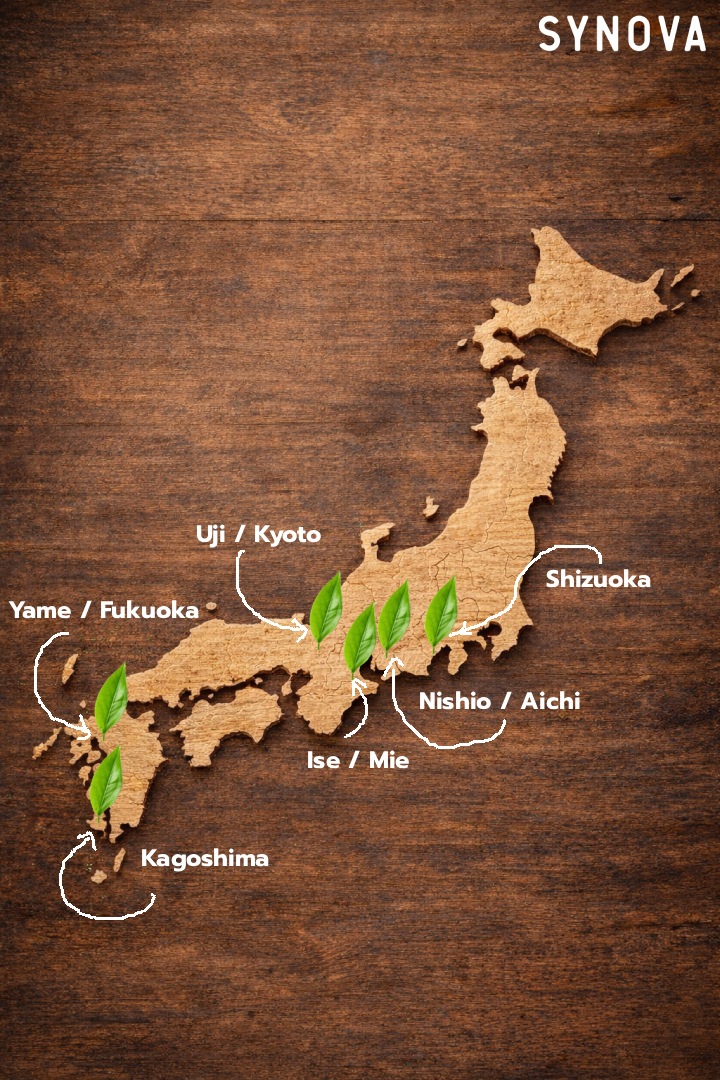


Major Matcha Growing Regions in Japan
Major Matcha Growing Regions in Japan

Major Matcha Growing Regions in Japan

Where is matcha grown? Japan is home to several well-known matcha growing regions, each with its own climate, soil conditions, and tea cultivation traditions. These differences influence the character of the tea leaves used to produce matcha, resulting in subtle variations in flavor and texture.
In this article, we explore six major matcha growing regions in Japan:
- Uji (Kyoto)
- Nishio (Aichi)
- Yame (Fukuoka)
- Shizuoka
- Kagoshima
- Ise (Mie)
Each region contributes its own character to the world of matcha.
Where Is Matcha Grown in Japan?
Matcha in Japan is produced in several tea-growing regions across the country. Among them, the most widely recognized areas include:
- Uji (Kyoto)
- Nishio (Aichi)
- Yame (Fukuoka)
- Shizuoka
- Kagoshima
- Ise (Mie)
Differences in climate, soil, geography, and tea cultivation practices can influence the character of the tea leaves used to make matcha. As a result, matcha from different regions may present subtle variations in flavor, texture, and overall profile.
1. Uji (Kyoto) – The Historic Home of Matcha
Uji, located in Kyoto Prefecture, is one of the most historically significant tea regions in Japan. It has long been associated with high-quality green tea and played an important role in the development of Japanese tea culture.
Because of its long history and connection to traditional tea ceremony practices, Uji matcha is often regarded as a classic reference point for premium matcha.
Matcha from this region is commonly associated with:
- Balanced flavor
- Fine powder texture
- Deep umami character
For many tea enthusiasts, Uji remains one of the most iconic matcha regions in Japan.
2. Nishio (Aichi) – A Major Matcha Production Hub
Nishio in Aichi Prefecture is widely recognized as one of Japan’s key centers for matcha production.
Over the years, the region has developed advanced cultivation and processing techniques, allowing producers to supply matcha at a consistent scale and quality.
Matcha from Nishio is commonly used in:
- Matcha beverages
- Japanese desserts
- Ice cream and confectionery
Because of its reliable supply, Nishio matcha plays an important role in the global matcha market.
3. Yame (Fukuoka) – High-Quality Matcha from Kyushu
Yame, located in Fukuoka Prefecture on the island of Kyushu, is another well-known tea-growing area in Japan.
The region’s mountainous terrain and morning mist create favorable conditions for tea cultivation, contributing to the distinctive character of its tea leaves.
Yame matcha is often described as having:
- Pronounced umami
- Smooth texture
- Well-rounded flavor
It is widely appreciated among tea drinkers looking for high-quality matcha from southern Japan.
4. Shizuoka – Japan’s Largest Tea-Producing Region
Shizuoka is one of the most famous tea-producing areas in Japan and is widely recognized as the country’s largest center for green tea production.
While the region is best known for sencha, it also contributes to the production of matcha.
Shizuoka’s strengths include:
- Extensive tea-growing areas
- Diverse landscapes
- Modern tea processing infrastructure
These factors make it a significant part of Japan’s tea industry.
5. Kagoshima – A Fast-Growing Modern Tea Region
Located in southern Japan, Kagoshima has become one of the fastest-growing tea-producing regions in the country.
With a warm climate and large agricultural areas, the region has developed modern tea farming practices that support large-scale production.
Today, Kagoshima matcha is widely used in:
- Matcha beverages in cafés
- Food and dessert production
- Ready-to-drink products
Because of this, Kagoshima has become an increasingly important source of matcha for modern food and beverage applications.
6. Ise (Mie) – A Traditional Tea Region
Ise, located in Mie Prefecture, is another historic tea-growing region in Japan. Tea from this area is often referred to as Isecha.
Although it may be less internationally recognized than Uji or Shizuoka, the region has a long tradition of tea cultivation and remains part of Japan’s broader tea landscape.
In recent years, teas from this region have begun attracting more attention among specialty tea enthusiasts.
Comparison of Major Matcha Producing Regions in Japan
Each tea region in Japan has its own characteristics shaped by climate, geography, and cultivation traditions. The table below provides a quick overview of several well-known matcha-producing areas.
|
Region |
Prefecture |
Matcha Characteristics |
Common Uses |
|
Uji |
Kyoto |
Historic matcha region with balanced flavor and strong umami |
Tea ceremony and premium matcha |
|
Nishio |
Aichi |
Major production hub with consistent supply |
Matcha drinks, desserts, ice cream |
|
Yame |
Fukuoka |
Known for rich umami and smooth texture |
Drinking matcha and high-grade teas |
|
Shizuoka |
Shizuoka |
Largest tea-producing region in Japan |
Various green teas including matcha |
|
Kagoshima |
Kagoshima |
Rapidly growing modern tea region |
Café beverages and food industry |
|
Ise |
Mie |
Traditional tea region known for Isecha |
Specialty tea markets |
Even though all these regions produce matcha, differences in environment, cultivation methods, and tea varieties can contribute to variations in flavor and character. For this reason, many matcha enthusiasts pay close attention to the origin of the tea they drink.
FAQ
What is the most famous matcha region in Japan?
Uji in Kyoto is often considered the most famous matcha region because of its long history and its strong connection to Japanese tea ceremony traditions.
What is Yame matcha?
Yame matcha refers to matcha produced in the Yame region of Fukuoka Prefecture. The area is known for producing high-quality green tea with a rich and smooth character.
Does Kagoshima produce matcha?
Yes. Kagoshima is one of Japan’s major tea-producing regions and has become an increasingly important source of matcha for beverages and food production.
Related Articles
- How to Choose Ceremonial Grade Matcha: Matcha Cultivars Explained
- What’s the Best Way to Make Matcha? A Comparison of 4 Popular Tools with Pros and Cons
- Koicha vs Usucha: What’s the Difference Between Thick and Thin Matcha?
- Matcha: From Ancient Tea to a Global Beverage
- How to Store Matcha Properly and Make It Last Longer
- Matcha Tasting Notes: How to Understand Matcha Flavor Like a Pro